
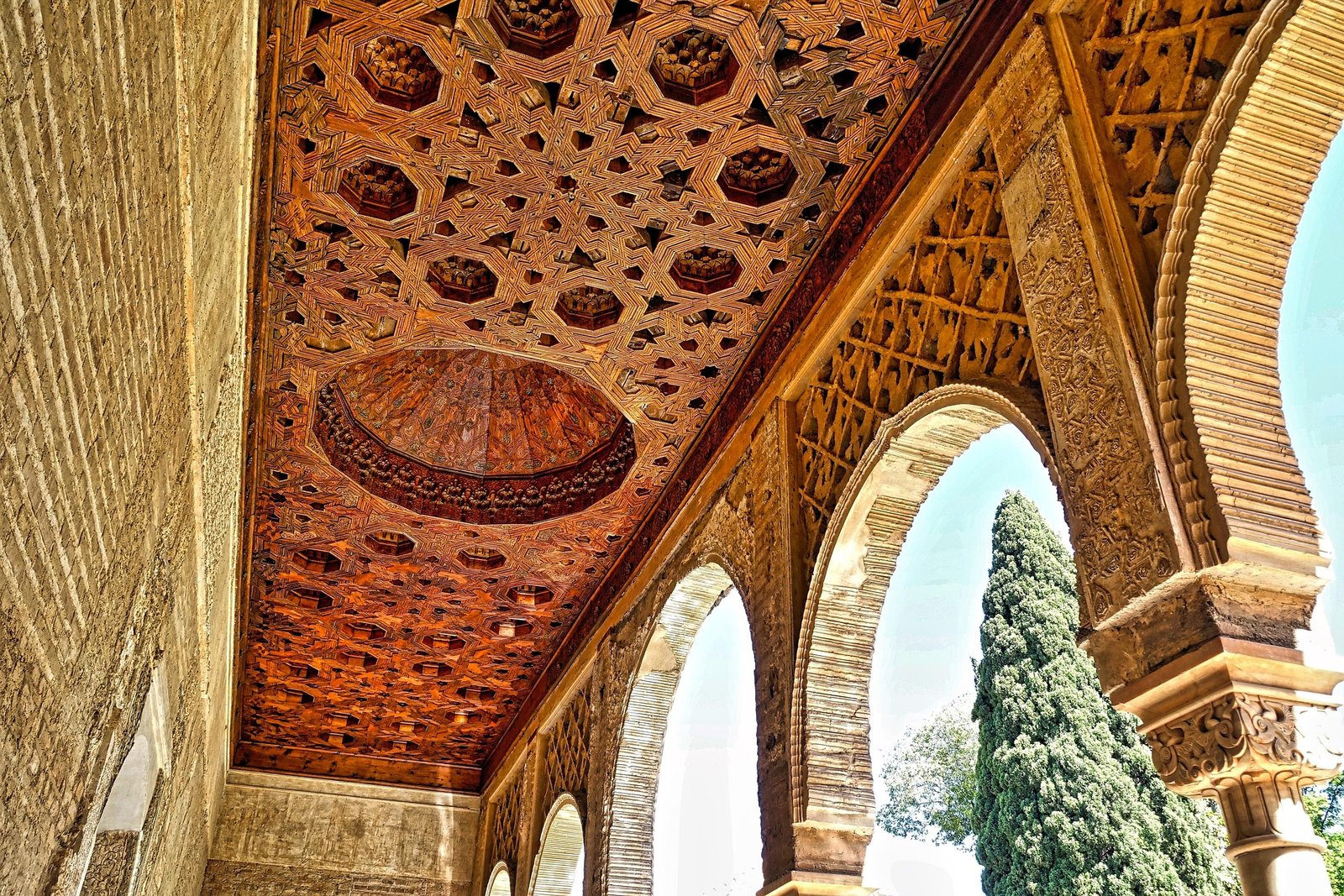
History of the Alhambra
The Alhambra in Granada, Spain, is one of the most impressive and iconic monuments in the world. Built on a hill overlooking the city, this majestic fortress has defied centuries of history, art and architecture. On this page, we will explore the rich history of the Alhambra, from its origins as a military fortress to a masterpiece of Moorish and Islamic art, and finally its transformation into a symbol of Spanish and European culture.
The End of Moorish Rule
However, the Nasrid dynasty and their rule over the Alhambra came to a tragic end. In 1492, Catholic kings Ferdinand and Isabella conquered Granada, leading to the end of Muslim rule in Spain and the beginning of the Catholic reconquista. The Alhambra came under Christian control, and the Nasrid Palace was renamed the Royal Palace of Granada.
The Renaissance and the Redesign
With the advent of the Renaissance in Europe, the Alhambra underwent further changes. The Christian kings, notably Charles V, decided to build a Renaissance palace within the complex, which was a sharp contrast to the Moorish architecture. Now known as the Palace of Charles V, this palace is a notable example of Renaissance architecture in Spain.
In addition, many of the Moorish decorations and artworks were removed or damaged during this period. Some rooms were converted into Catholic chapels. Despite these changes, parts of the Moorish heritage were preserved in the Alhambra. The complex remained an important cultural and historical site in Spain.
Neglect and rediscovery
In the following centuries, the Alhambra fell into disrepair and was largely neglected. During the French occupation in the early 19th century, parts of the complex were damaged by Napoleon’s troops. It was not until the 19th century that there was renewed interest in preserving and restoring the Alhambra.
Spanish writer and politician Washington Irving played an important role in rediscovering the Alhambra for the Western world. In 1832, he published “Tales of the Alhambra,” a series of stories and essays describing the splendour and history of the Alhambra. His work contributed to the growing fascination with the Alhambra and its appeal to artists, writers and travellers.
Want to plan the rest of your visit? See our Alhambra Visitor Guide for practical information about tickets, routes, opening hours and preparation. If you still have short practical questions, you can find quick answers on our Alhambra frequently asked questions page.